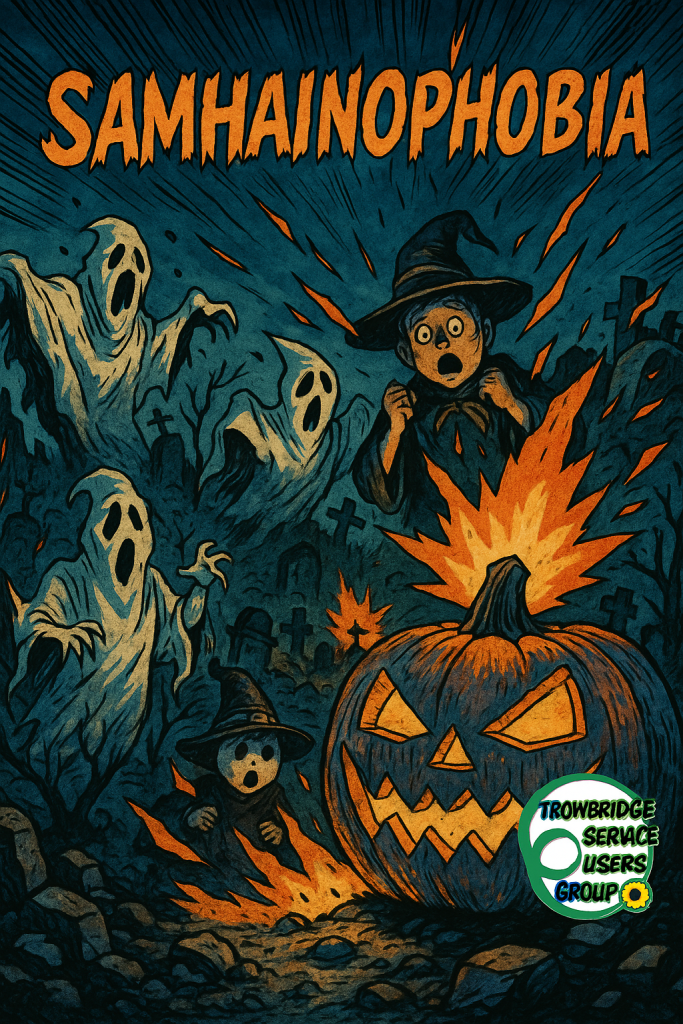
What is samhainophobia?
Samhainophobia is the specific phobia of Halloween — an intense, persistent, and often irrational fear of anything associated with Halloween (costumes, decorations, trick-or-treating, jump-scares). The name comes from Samhain, the ancient Celtic festival that evolved into modern Halloween. Cleveland Clinic+1
How common are specific phobias? (where samhainophobia fits in)
Samhainophobia is a type of specific phobia (the same diagnostic family as fear of heights, animals, or flying). In the U.S., an estimated 9.1% of adults had a specific phobia in the past year; lifetime prevalence is reported around 12.5%. Prevalence varies by country and study — cross-national lifetime estimates average around 7.4% and range roughly 2.6%–12.5% across samples. Women are consistently more affected than men (example: past-year 12.2% female vs 5.8% male in NIMH data). NIMH+1
Why does it happen? (causes & risk factors)
Common contributors to specific phobias include:
- Traumatic learning: a scary or traumatic Halloween-related event (e.g., being frightened by a costume, a prank gone wrong) can trigger long-term conditioned fear. Vocabulary.com+1
- Observational learning: seeing caregivers or peers respond with intense fear to Halloween cues. ScienceDirect
- Temperamental/genetic vulnerability: underlying anxiety proneness increases risk for phobias. ScienceDirect
Symptoms
People with samhainophobia may experience immediate anxiety or panic when confronted with Halloween stimuli, strong avoidance (staying indoors, cancelling plans in October), physical symptoms (heart racing, sweating, shortness of breath), and distress that interferes with daily life. If the fear meets DSM-5 criteria (excessive, persistent, causing impairment, lasting ≥6 months) it can be diagnosed as a specific phobia. Verywell Mind+1
Treatment & self-help (what helps)
Effective, evidence-based approaches for specific phobias apply to samhainophobia too:
- Cognitive Behavioral Therapy (CBT) — helps change thought patterns and coping behaviours.
- Exposure therapy / desensitisation — gradual, controlled exposure to Halloween-related cues to reduce fear response. This can be delivered as standard weekly sessions or in some models as a one-session intensive treatment. nhs.uk+1
The NHS provides self-help steps (graded exposure, relaxation techniques) and notes exposure therapy is a core effective approach. nhs.uk
Quick practical guide for someone with samhainophobia
- Start small: look at friendly Halloween images online (avoid horror/ jump-scare content).
- Use graded exposure: create a ladder from least to most scary (e.g., a cartoon pumpkin → tiny plastic jack-o’-lantern → walking past a decorated house at daylight → visiting a mildly decorated yard at dusk).
- Practice breathing and grounding during exposure to avoid panic.
- Seek professional help if avoidance is severe or the fear is causing big life disruptions—CBT/exposure is effective. nhs.uk+1
Facts & sources (key references)
- Cleveland Clinic — overview of samhainophobia and common approaches. Cleveland Clinic
- National Institute of Mental Health (NIMH) — statistics on specific phobia prevalence and gender differences in the U.S. (past-year 9.1%; lifetime ~12.5%; females higher than males). NIMH
- Wardenaar et al., cross-national epidemiology of specific phobia (systematic data on lifetime prevalence range and mean). PMC
- NHS — practical treatment information and self-help for phobias (CBT, exposure). nhs.uk+1
- PsychCentral / Verywell / HealthCentral — accessible explanations of samhainophobia and coping strategies. Psych Central+2Verywell Health+2
Graphs & downloadable images
I generated two charts to illustrate prevalence figures cited above:
- Past-year specific phobia by gender (US, NIMH) — shows female vs male past-year prevalence.
- Cross-national lifetime prevalence (Wardenaar et al. 2017) — shows range (2.6–12.5) and mean (7.4%).
You can download the PNGs here:
Download gender breakdown chart
Download lifetime prevalence range chart
Notes and caveats
- Samhainophobia itself is not separately tracked in large epidemiological studies; it’s categorized under specific phobias. The prevalence numbers above are for specific phobias generally — samhainophobia is one possible subtype. NIMH+1
- Different studies use different methods and diagnostic thresholds, which explains the range in lifetime prevalence across countries. PMC

 Postal Address