
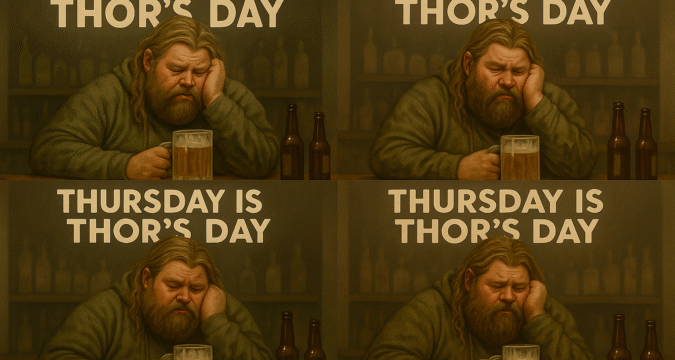
the norse god thor and his mental battles including forced gender reassignment and compare that with the Thor that exhibits signs of depression, PTSD, and alcoholism following the events of Avengers: Infinity War. These symptoms manifest as weight gain, reclusiveness, and a reliance on alcohol.
Introduction
Thor, the hammer-wielding god of thunder, is often seen as the embodiment of raw power, masculinity, and courage. But beneath the thunderclouds, both in Norse mythology and modern Marvel storytelling, Thor faces complex internal battles. From mythological tales of forced gender transformation to Marvel’s depiction of trauma and PTSD, Thor becomes more than a god—he becomes a mirror to our own human struggles.
Norse Mythology: Thor and Gender Transformation
In the Þrymskviða (The Lay of Thrym), a humorous yet revealing Norse poem, Thor loses his hammer Mjölnir, stolen by the giant Thrym. The price to retrieve it? Thor must disguise himself as the goddess Freyja and marry the giant. Though reluctant and humiliated, Thor dons a bridal veil and jewelry, playing the part until he can reclaim his weapon.
While this tale was likely meant to amuse, it also reflects themes of forced gender reassignment and the discomfort of being placed into roles that contradict one’s identity. Thor’s anger, resistance, and eventual acceptance of the disguise under pressure reveal a struggle many face when society or circumstance forces a change in gender presentation or identity.
Marvel’s Thor: Depression, PTSD, and Alcoholism
Fast forward to Avengers: Endgame, and we meet a very different Thor. Traumatized by his perceived failure to stop Thanos in Infinity War, Thor retreats into isolation in New Asgard. He gains weight, becomes reclusive, and drowns his guilt in alcohol.
This version of Thor—often referred to as “Bro Thor” or “Fat Thor”—exhibits clear signs of:
- Depression: Listlessness, lack of motivation, self-loathing.
- PTSD: Flashbacks, irritability, emotional numbness.
- Alcoholism: Using substances to avoid confronting pain.
Though some criticized the portrayal as comedic, it powerfully reflects how even the strongest among us can be brought low by trauma.
The Common Thread: Identity and Vulnerability
Both Thors—mythological and cinematic—grapple with identity, control, and vulnerability. In one, Thor is stripped of his masculine role. In the other, he is stripped of his self-worth. Whether being forced to wear a dress or hiding behind a beer can, these depictions humanize a god often seen as untouchable.
Conclusion: Gods Can Struggle Too
Thor’s journey teaches us that strength isn’t the absence of pain—it’s the courage to face it. Whether you’re battling internal identity conflicts, trauma from past events, or struggling with depression, even gods know what it’s like to fall. And like Thor, we too can rise again.
🧠 Resources for Support:
- NAMI.org – Mental health resources and support groups
- The Trevor Project – Support for LGBTQ+ youth
- Alcoholics Anonymous – Support for those battling alcohol addiction

 Postal Address