
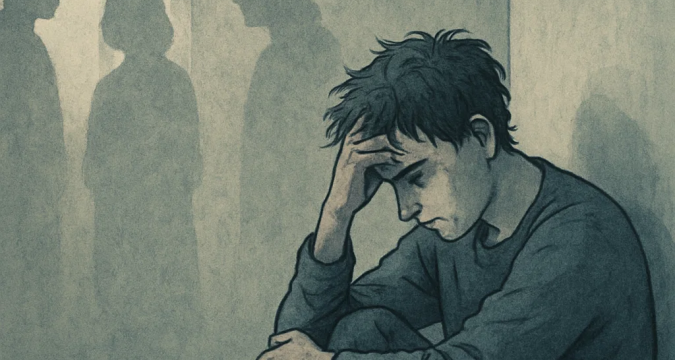
Social isolation is both a symptom and consequence of many mental health conditions. For millions of people living with mental illness, feelings of loneliness are not just emotional struggles—they are deeply rooted in societal structures, cultural stigmas, neurodiverse experiences, and systemic failures in care. Despite growing awareness around mental health, many people with mental illnesses continue to become isolated and alone, often when they most need connection and support.
The Relationship Between Mental Illness and Isolation
Mental illness can fundamentally impact how individuals relate to others and experience the world. Conditions such as depression, anxiety, bipolar disorder, schizophrenia, autism spectrum disorder (ASD), and personality disorders often impair social interaction, communication, and trust. These challenges can result in withdrawal from friends, family, and community.
A study published in The Lancet Psychiatry found that loneliness was prevalent in individuals with a range of psychiatric disorders and significantly increased the risk of self-harm and suicidal ideation (Wang et al., 2020). The bidirectional relationship between mental health and loneliness means that poor mental health can cause isolation—and isolation can worsen mental health, creating a damaging cycle.
Neurodiversity and Social Disconnect
Neurodiversity refers to the natural variation in human brain function, particularly in how people process information and interact socially. People with neurodevelopmental conditions such as autism, ADHD, and dyslexia often perceive and experience the world differently from the neurotypical majority.
For many neurodivergent individuals, social norms can be confusing or exhausting. Autistic adults, for instance, report high levels of social anxiety, sensory overload in public spaces, and difficulty maintaining friendships—factors that contribute heavily to isolation (Milton, 2012).
In a systematic review published in Autism Research, Cassidy et al. (2018) found that autistic adults are at significantly higher risk of chronic loneliness and suicide. Much of this stems not from their neurotype itself, but from the exclusion they face in a world not designed for them—a concept often referred to as the “double empathy problem,” where both neurodivergent and neurotypical individuals struggle to understand one another.
Cuts to Social Care and Community Services
A critical but often overlooked factor contributing to isolation is the reduction in mental health and social care services. Over the past decade, many countries have experienced cuts to public spending, directly impacting community outreach programs, counseling availability, supported housing, and crisis intervention services.
In the UK, for example, mental health services have suffered chronic underfunding. A report by the King’s Fund (2023) highlighted that many community-based services have been scaled back, leaving vulnerable individuals without regular contact or meaningful support. When services are limited or removed, people may be left to manage their conditions alone—often resulting in hospitalisation, homelessness, or long-term isolation.
This issue disproportionately affects individuals with complex mental health needs, who require coordinated support across health, housing, employment, and social care. Without adequate systems in place, these individuals may “fall through the cracks.”
Lack of Support During Crisis and Transition
Isolation often intensifies during moments of acute need: following a psychiatric hospitalization, during unemployment, after bereavement, or in the transition to adulthood. Unfortunately, many individuals report being discharged from mental health care without a clear plan or support network—a situation referred to as the “cliff-edge” of care.
A 2021 study in BMC Psychiatry showed that post-discharge support is often fragmented and inconsistent, increasing the risk of relapse and disengagement (Blake et al., 2021). Without adequate follow-up, people may struggle to re-integrate into their communities or rebuild relationships, leading to further withdrawal.
Stigma, Discrimination, and Shame
Stigma remains a powerful force pushing people with mental illness into isolation. Public misunderstanding, fear, or judgment can lead to rejection by peers, loss of employment, strained family relationships, or avoidance by the wider community.
According to the World Health Organization (WHO), stigma is one of the largest barriers to treatment and social inclusion for people with mental disorders (WHO, 2019). Internalised stigma—when individuals absorb and believe negative stereotypes—can also lead to a loss of self-worth and reluctance to seek help.
Towards Solutions: Inclusion, Investment, and Understanding
To break the cycle of isolation, comprehensive action is required. Solutions include:
- Investing in community mental health services that offer accessible and ongoing support, especially during crisis transitions.
- Promoting neurodiversity-affirming spaces and education to foster understanding and reduce the social disconnect experienced by neurodivergent people.
- Fighting stigma through public education, storytelling, and the inclusion of people with lived experience in policy-making.
- Expanding peer support networks, where individuals with similar experiences can support one another without judgment.
- Ensuring continuity of care, especially during hospital discharge or major life transitions.
Loneliness is not an inevitable consequence of mental illness—it is the result of systemic neglect, societal exclusion, and insufficient support. Addressing the root causes of isolation is not only a moral imperative but a public health priority.
References
- Blake, V., Pilgrim, J., & Bell, A. (2021). Mental health service user experiences of mental health discharge planning: A systematic review. BMC Psychiatry, 21, 292. https://doi.org/10.1186/s12888-021-03362-4
- Cassidy, S., Bradley, L., Bowen, E., Wigham, S., & Rodgers, J. (2018). Risk markers for suicidality in autistic adults. Autism Research, 11(5), 930–940. https://doi.org/10.1002/aur.1946
- Milton, D. (2012). On the ontological status of autism: The ‘double empathy problem’. Disability & Society, 27(6), 883–887. https://doi.org/10.1080/09687599.2012.710008
- Wang, J., Mann, F., Lloyd-Evans, B., Ma, R., & Johnson, S. (2020). Associations between loneliness and perceived social support and outcomes of mental health problems: A systematic review. The Lancet Psychiatry, 7(9), 728–739. https://doi.org/10.1016/S2215-0366(20)30373-6
- The King’s Fund. (2023). Mental health services in England: Understanding the crisis in community support. https://www.kingsfund.org.uk
- World Health Organization. (2019). Mental health: Strengthening our response. https://www.who.int/news-room/fact-sheets/detail/mental-health-strengthening-our-response

 Postal Address