
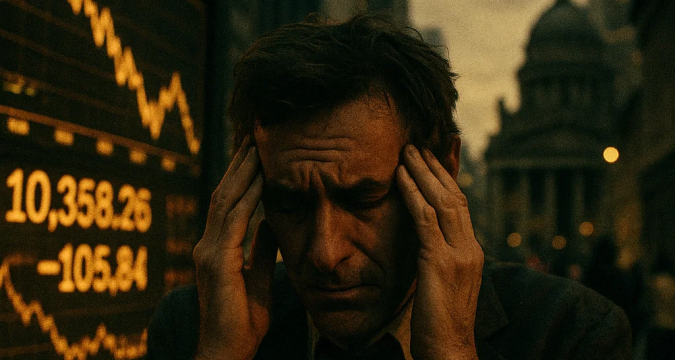
Mental health is no longer just a personal issue—it’s a global economic concern. The links between economic instability, global crises, and psychological well-being are becoming clearer every year. From job insecurity to rising inequality, from pandemics to climate shocks, uncertainty doesn’t just affect individuals with diagnosed conditions—it ripples through society as a whole
🌍 The Scale of the Mental Health Crisis
💼 How Economic Instability Fuels Mental Distress
Economic downturns and uncertainty have a direct impact on mental health:
- Unemployment & insecurity → Higher anxiety, depression, and substance use (ScienceDirect).
- Financial anxiety → Rising living costs lead to stress, poor physical health, and self-medication.
- Global crises → COVID-19, wars, and climate shocks worsened distress worldwide, especially through job loss and disrupted identity.
“A society built on constant insecurity is a society built on poor mental health.”
— Gary Stevenson, Gary’s Economics YouTube Channel
⚖️ Global Instability and Its Wider Impact
- Humanitarian crises (wars, forced migration, climate disasters) push PTSD rates as high as 40% among displaced people.
- Economic inequality directly correlates with higher rates of mental illness and weaker social trust.
“When wealth is concentrated in the hands of a few, the majority live in permanent precarity. That precarity doesn’t just hurt wallets—it destroys mental health.”
— Gary Stevenson (Facebook page)
👩🎓 Young People: A Generation Under Pressure
Gary Stevenson often argues that young people face a broken economic system where housing is unaffordable, wages stagnate, and opportunity feels out of reach.
📉 The Costs for Society and the Economy
- UK finance workers suffering burnout cost employers £5,379 per worker annually (FT).
- Anxiety and depression lead to 12 billion lost workdays every year worldwide.
- Long-term sickness and early workforce exits are dragging down economies, especially after COVID.
✅ What Needs to Change?
Experts in both mental health and economics agree: systemic change is essential.
- 💡 Invest in mental health care → Close treatment gaps (up to 85% in low-income countries).
- 🛡️ Build safety nets → Housing, unemployment support, and welfare reduce crisis stress.
- 🎓 Youth-focused support → Early intervention in schools and communities.
- 🏢 Workplace mental health → Companies embedding mental health initiatives see productivity gains of up to 60%.
- ⚖️ Reduce inequality → Stevenson argues that wealth redistribution is also mental health policy.
🎥 Gary Stevenson Explains Inequality and Mental Health
🔚 Conclusion
Mental health, the economy, and global instability are inseparable. Uncertainty and inequality create a vicious cycle that harms not just the most vulnerable, but society as a whole.
“If people live in permanent fear of insecurity, they will never be well. And a society where most people are unwell cannot prosper.”
— Gary Stevenson
Tackling mental health means tackling the economic structures that perpetuate instability. It’s not just about treatment—it’s about fairness, security, and resilience.

 Postal Address