
Introduction
World Suicide Prevention Day (WSPD), observed each year on 10 September, was established in 2003 by the International Association for Suicide Prevention (IASP) in partnership with the World Health Organization (WHO) and the World Federation for Mental Health (Wikipedia, World Health Organization). Its overarching goal is to raise global awareness about suicide, reduce stigma, and emphasize that suicide is preventable (World Health Organization).
Over the years, WSPD has evolved to include annual thematic campaigns—most recently, the 2025 theme: “Changing the Narrative on Suicide”, which focuses on transforming silence, stigma, and misunderstanding into openness, empathy, and support (IASP, Pan American Health Organization).
Objectives & Goals
- Raise awareness of suicide as a major public health issue.
- Promote understanding and reduce stigma around suicidal thoughts and behaviors.
- Encourage community action, from individuals to organizations and governments, promoting compassion and support.
- Support policy development on national suicide prevention strategies, including decriminalization and increased resource access.
- Facilitate prevention training, share stories, and encourage local-level engagement (IASP, National Today, World Health Organization).
Global Statistics
Suicide Worldwide
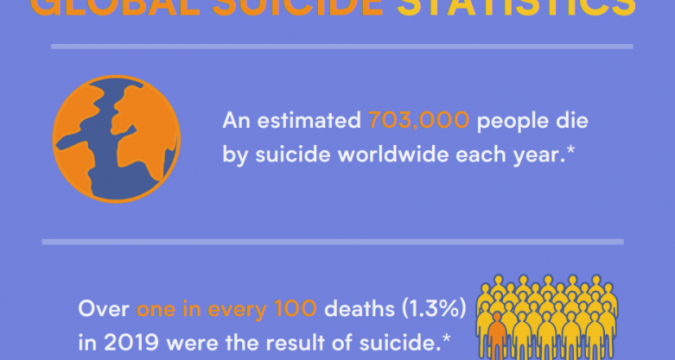
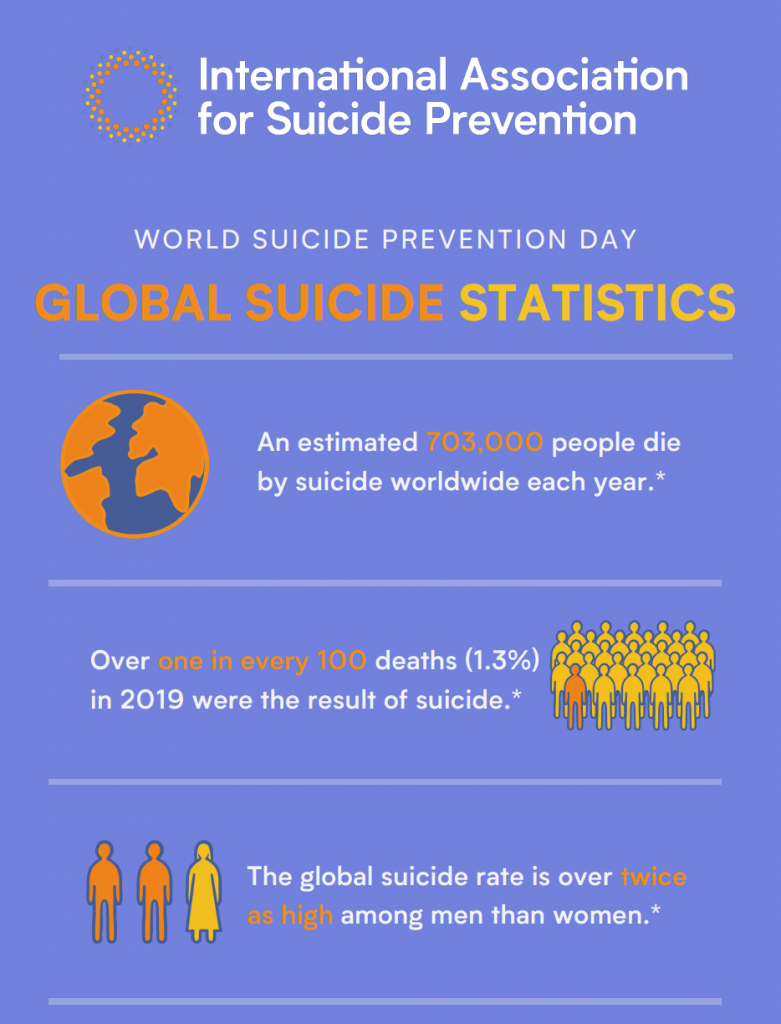
- Annually, over 720,000 people die by suicide globally (World Health Organization).
- Suicide is the third leading cause of death among 15–29-year-olds (World Health Organization).
- 73% of suicides occur in low- and middle-income countries (World Health Organization).
- For every suicide, there may be 20 or more attempts (World Health Organization).
- The suicide mortality rate has declined from approximately 9 per 100,000 in 2000 to 6 per 100,000 in 2021 (datadot).
- The rate has dropped by ~35% since 2000, yet further progress is needed to meet the SDG target of a one-third reduction by 2030 (IASP, World Health Organization).
- Globally, men die by suicide at more than double the rate of women (12.3 vs. 5.6 per 100,000 in 2021) (IASP, datadot).
Regional Focus – United Kingdom
- In 2023, the UK recorded 7,055 suicides, averaging 19 deaths per day. Most of these were in England and Wales (Wikipedia).
- Suicide is the leading cause of death for men under 50 in the UK (Wikipedia).
Trends & Noteworthy Details
- There was a global decline in the suicide rate—even as absolute numbers rose—reflecting population growth; the age-standardized rate dropped ~33% between 1990 and 2016 (TIME).
- In the United States, 2023 data showed over 49,000 deaths by suicide, equating to one every 11 minutes (CDC).
- Within the past year, 12.8 million adults reported suicidal thoughts, 3.7 million made plans, and 1.5 million attempted suicide (afsp.org, National Institute of Mental Health).
- A concerning trend has emerged in U.S. preteens (ages 8–12), where suicide rates rose by 8.2% annually between 2008 and 2022, especially among girls (Reuters).
Suggested Graphics and Diagrams (for inclusion in your paper)
- Global Trend Line Graph: Suicide mortality rate (per 100,000) from 2000 to 2021.
- Age & Attempt Comparison Chart: Ratio of suicide attempts vs. deaths per year.
- Regional Comparison Map/Bar Chart: Male vs. female suicide rates across WHO regions.
- UK Annual Suicides Bar Graph: 2023 data, by region.
- US Breakdown Infographic: Suicidal thoughts, plans, and attempts statistics.
Sample Outline for Your Paper
1. Introduction
- Definition and origins of WSPD.
- Co-sponsorship by IASP, WHO, and others.
- Importance of suicide prevention as a global challenge.
2. Historical Context & Goals
- First observed in 2003 and growing global participation.
- Themes (e.g., 2025’s “Changing the Narrative”).
- Goals: awareness, policy, action, inclusion, education.
3. Global Statistics & Trends
- Annual suicide death figures and age-group impacts.
- Breakdown by gender and income level regions.
- Progress toward global targets (SDGs).
4. Regional Focus – Examples
- UK: 2023 stats and demographic insights.
- US: Rates, frequency, and youth trends.
- Additional country data (India, Lesotho, etc., if relevant).
5. Prevention & Intervention
- Evidence-based approaches (e.g., WHO “LIVE LIFE”).
- Role of campaigns, helplines, training, media guidelines.
- Emphasis on reducing stigma and enhancing support networks.
6. Conclusion
- Restate the message: suicide is preventable.
- Highlight the continued need for global cooperation, awareness, and systemic response.
- Reinforce that changing the narrative and building empathy are vital to saving lives.

 Postal Address