
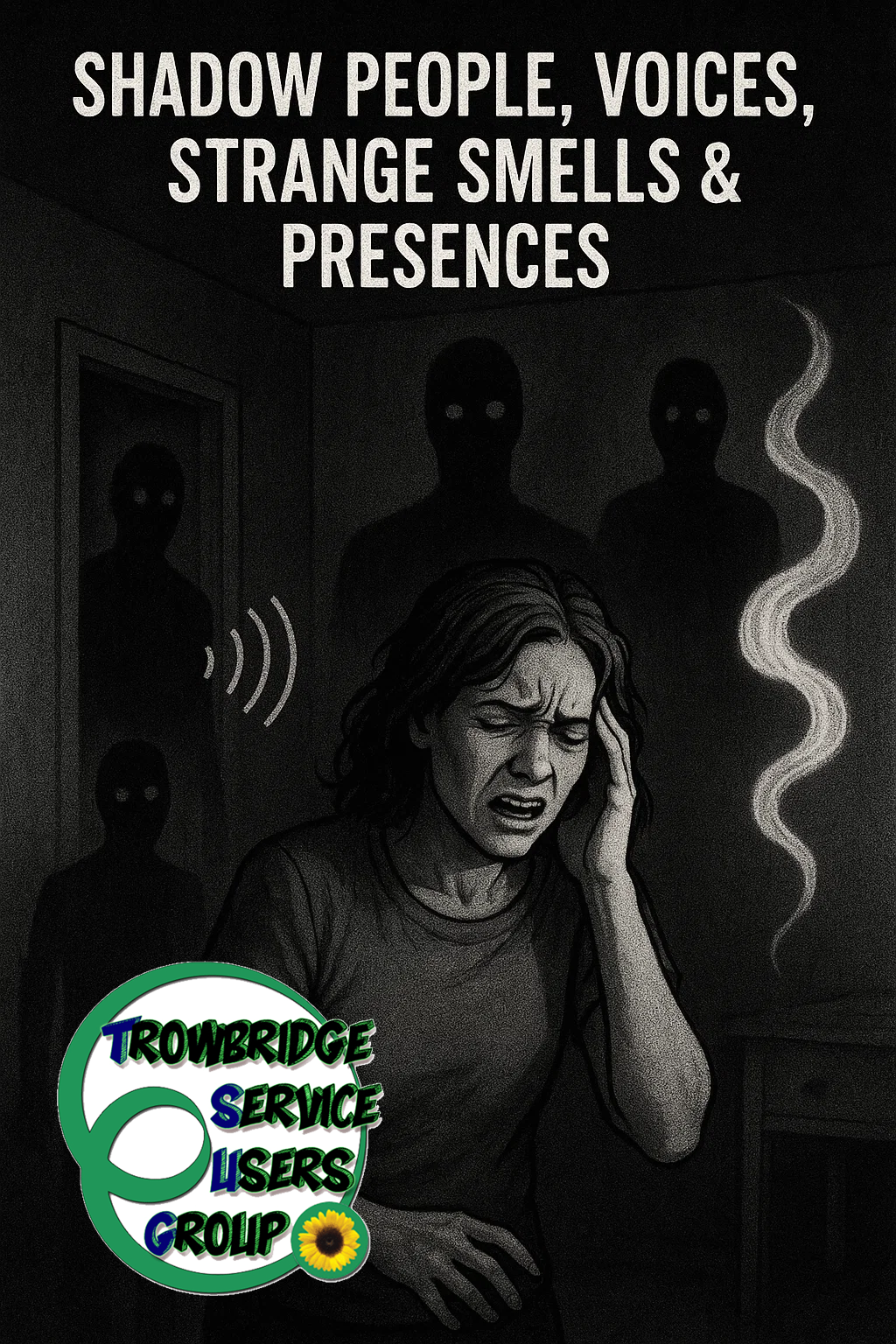
When we think about Borderline Personality Disorder (BPD), we often picture intense emotions, unstable relationships, and fear of abandonment. But for many people living with BPD, the experience goes far beyond that — into territory that can feel surreal, frightening, and deeply misunderstood.
What do you do when you start seeing shadowy figures? Hearing voices? Feeling an unseen presence in the room or noticing smells that no one else can detect?
You’re not alone — and you’re not imagining it.
👁 Seeing Shadow People & Feeling Watched
Some people with BPD describe seeing brief glimpses of “shadow people” — dark shapes just out of sight, especially during moments of stress, panic, or exhaustion. Others describe a strong sense of being watched, even when alone.
These are often linked to:
- Dissociation (a detachment from reality)
- Hypervigilance from trauma
- Emotional overwhelm and fear responses
These experiences aren’t necessarily hallucinations in the clinical sense — they’re more like sensory misfires under emotional pressure.
👂 Hearing Voices
Yes, hearing voices can happen in BPD. While it’s more commonly associated with psychotic disorders, many people with BPD report:
- Hearing their name being called
- Inner dialogue becoming externalized (as if someone else is speaking)
- Voices that criticize, comfort, or comment
This is usually brief and related to emotional states — especially in times of loneliness, fear, or distress. It’s part of what professionals call transient psychotic symptoms, which are not uncommon in BPD.
👃 Strange Smells & Sensory Flashbacks
Have you ever smelled something — perfume, smoke, alcohol — and no one else around you could smell it? These olfactory hallucinations may seem strange but are not unheard of in BPD, especially in those with a trauma history.
Sometimes, these smells are linked to traumatic memories or are part of dissociative episodes. They often come and go quickly but can be very unsettling.
🧠 Why Is This Happening?
While BPD isn’t a psychotic disorder, intense emotional stress can trigger short episodes of perceptual disturbances, such as:
- Derealization (feeling like the world isn’t real)
- Depersonalization (feeling disconnected from yourself)
- Brief hallucinations or paranoia
These experiences are often temporary, and while frightening, they don’t mean you’re losing touch with reality. They’re signals that your nervous system is under major stress.
💬 How to Cope
If you’ve experienced any of the above, know this: you’re not broken, and you’re definitely not alone.
Here are some helpful strategies:
- Grounding techniques (e.g., using cold water, 5-4-3-2-1 method, textures)
- Mindfulness practices
- Dialectical Behavior Therapy (DBT) — especially distress tolerance skills
- Creative outlets (journaling, art, music)
- Talk to a therapist who understands BPD and trauma
💙 You Are Not Alone
Unusual sensory experiences in BPD can be confusing, isolating, and even frightening — but they are valid. They don’t make you “crazy” or “broken.” They are symptoms, not identity.
With the right tools, support, and understanding, you can learn to manage them — and find calm even in the chaos.
👥 Looking for support in the Trowbridge area?
Trowbridge Service Users Group is a free, peer-led support group for anyone living with mental illness. Visit us at www.trowbridgeusersgroup.co.uk

 Postal Address