Anxiety is something we all experience. In fact, it’s part of what makes us human. That “butterflies in the stomach” feeling before a job interview, exam, or big decision is a normal response to stress. But when worry spirals out of control, lasts for months, and interferes with everyday life, it can become an anxiety disorder.
In this post, we’ll explore:
- Why normal levels of anxiety are actually healthy.
- What causes anxiety disorders.
- Treatments that work (backed by NICE guidelines).
- How common anxiety is across the UK, with a spotlight on Wiltshire.
- Graphs and stats you can use to understand the bigger picture.
Normal Anxiety: Your Body’s Alarm System
At healthy levels, anxiety is your brain’s way of keeping you safe. It sharpens focus, helps you prepare, and motivates action.
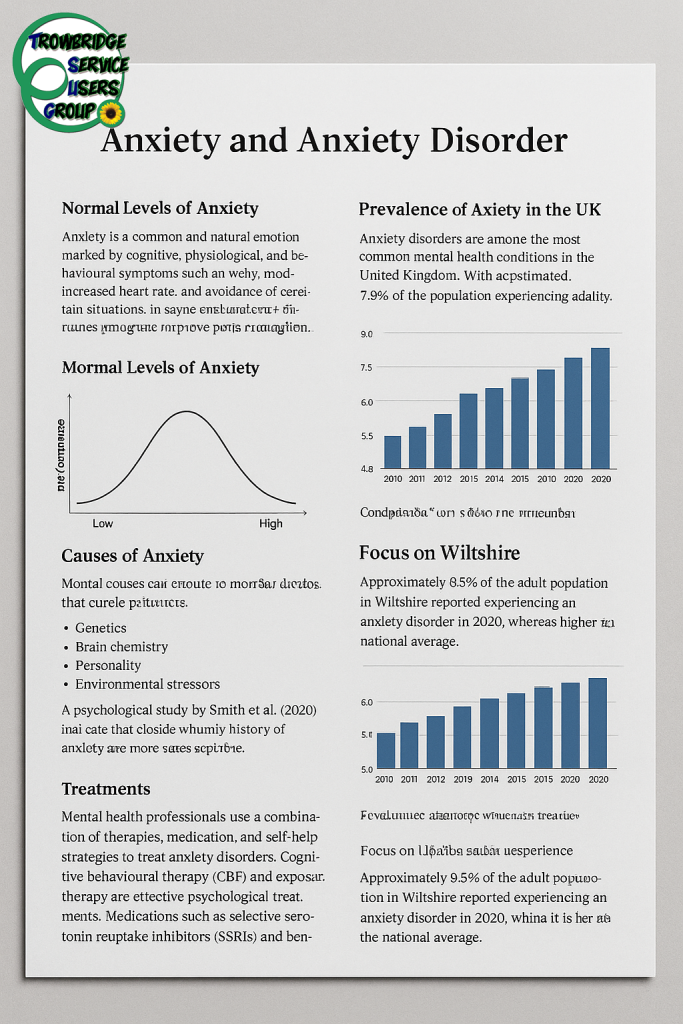
Psychologists often refer to the Yerkes–Dodson law: performance improves with moderate arousal but declines when stress is too high or too low. Imagine an upside-down U-shape — a little anxiety helps you nail that presentation, but too much causes panic and avoidance.
✅ Healthy anxiety = helpful signal
❌ Disordered anxiety = false alarm that won’t switch off
When Does Anxiety Become a Disorder?
Anxiety disorders are diagnosed when worry is excessive, persistent, and impairing. Common types include:
- Generalised Anxiety Disorder (constant worry, restlessness, muscle tension).
- Panic Disorder (sudden panic attacks, fear of losing control).
- Phobias (intense fear of specific objects/situations).
- Social Anxiety Disorder (fear of embarrassment or judgement).
- OCD and PTSD (sometimes grouped under anxiety-related conditions).
Causes: Why Do Some People Develop Anxiety Disorders?
No single cause explains everything, but research highlights three main risk areas (Barlow’s “triple vulnerability model”):
- Biological – genetics, temperament, brain chemistry.
- Psychological – low perceived control, negative thought patterns.
- Learning & environment – trauma, stress, or avoidance behaviours.
Cognitive theories (Beck, Clark & Wells) also show that people with anxiety often:
- Overestimate danger.
- Underestimate their ability to cope.
- Rely on safety behaviours (like avoiding social events) that reinforce fear.
Prevalence in the UK and Wiltshire
📊 The national picture
The Adult Psychiatric Morbidity Survey (APMS 2023/4) reports:
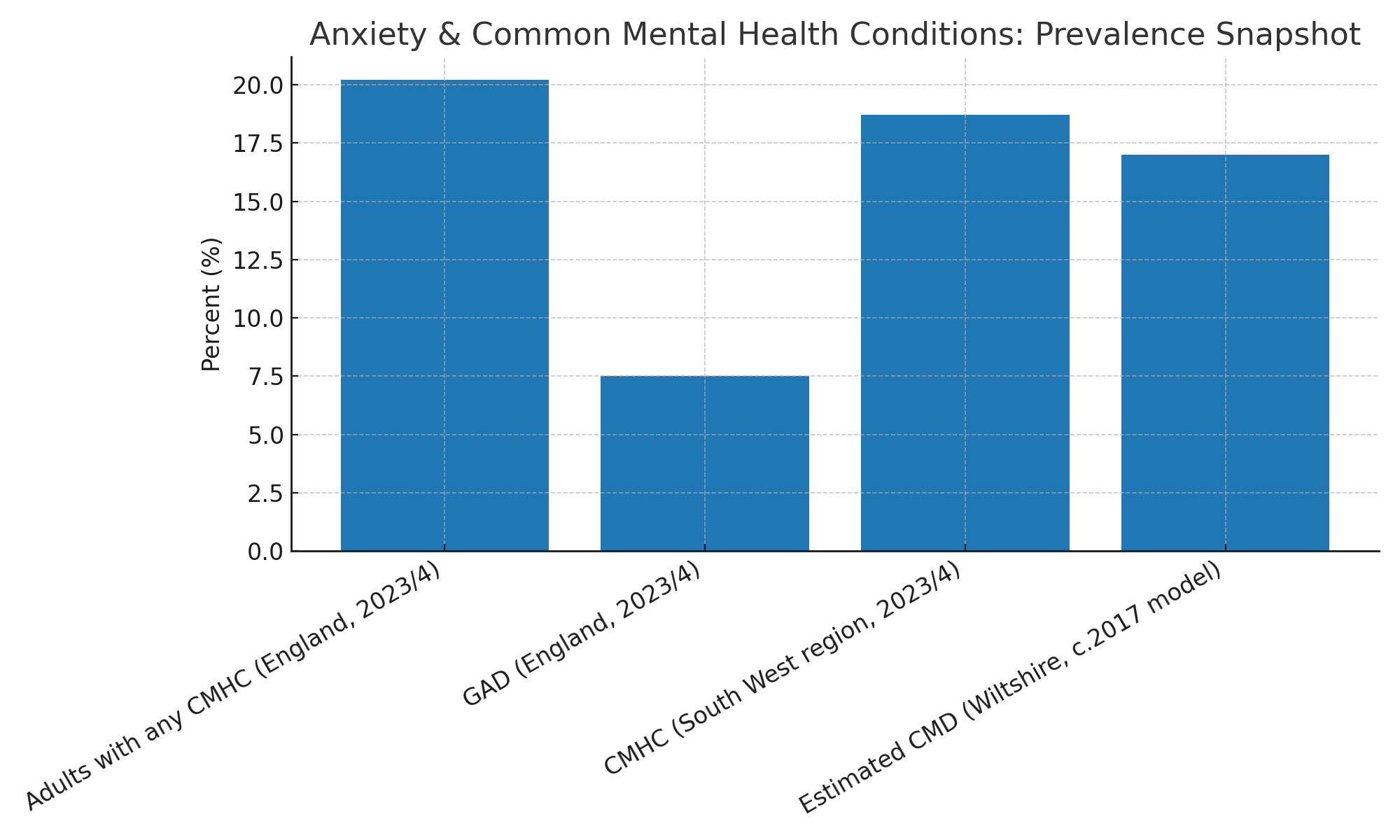
- 20.2% of adults in England have a common mental health condition.
- 7.5% meet criteria for Generalised Anxiety Disorder (GAD).
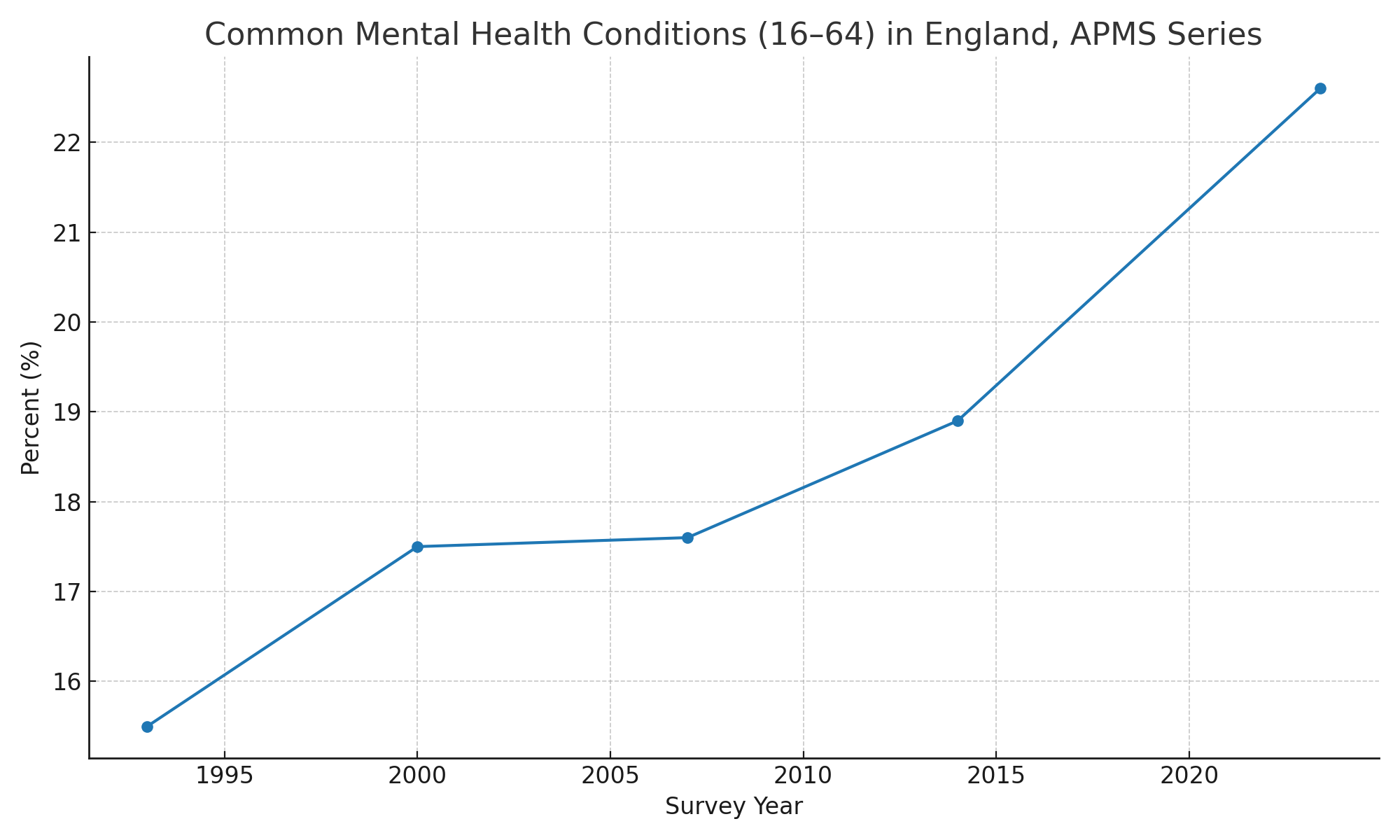
- Rates are rising — especially in 16–34 year olds.
📍 Wiltshire snapshot
Wiltshire’s mental health needs assessment estimates around 17% of adults live with a common mental disorder — that’s about 67,000 people. This mirrors national patterns but highlights the scale of local need.
Treatments That Work
The good news? Anxiety disorders are highly treatable. NICE (National Institute for Health and Care Excellence) recommends:
- Psychological therapies: Cognitive Behavioural Therapy (CBT), guided self-help, applied relaxation, and exposure therapy.
- Medication: SSRIs (like sertraline) are first-line for GAD; SNRIs or pregabalin may be alternatives.
- Combined approaches for persistent cases.
In England, many people access these through NHS Talking Therapies (formerly IAPT). Locally, the Bath & North East Somerset, Swindon and Wiltshire (BSW) ICB commissions services. Recovery rates here are lower than national averages (about 32% vs 50% in 2022/23), which shows where improvement is needed.
Community & Self-Help
Alongside professional care, people often find benefit from:
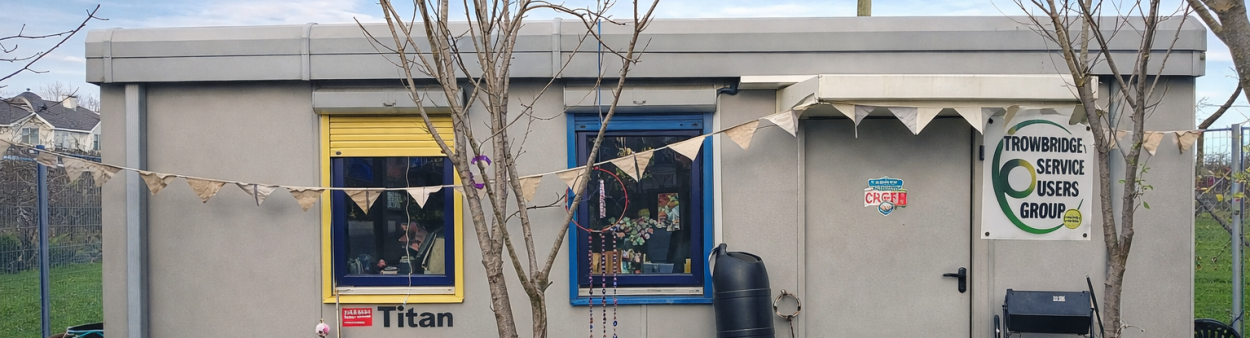
- Peer support groups (in Wiltshire, groups like Trowbridge Service Users Group).
- Healthy routines (sleep, exercise, diet).
- Gradual exposure to feared situations.
- Stress-management techniques (mindfulness, journaling, breathing exercises).
Graphs & Stats
Here are two visual snapshots you can use in your blog (upload as media in WordPress):
(Downloadable CSV versions are also available if you want to share raw data.)
Final Thoughts
Anxiety is not always the enemy — at normal levels, it protects and motivates. But when it takes over, it becomes one of the most common and disabling mental health problems in the UK.
For Wiltshire, the challenge is ensuring enough accessible, evidence-based support so that recovery rates match the national picture. And at an individual level, recognising when anxiety has tipped from helpful to harmful is the first step toward recovery.
👉 If you live in Wiltshire, you can self-refer to NHS Talking Therapies through the local ICB website or speak to your GP. For crisis support, contact 111 (option 2) or Samaritans on 116 123.

 Postal Address