
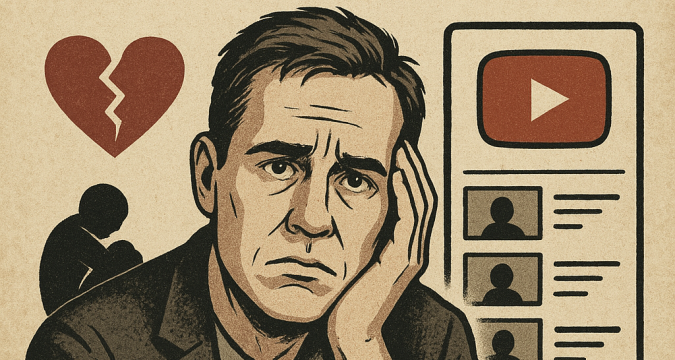
A Reflection on Cultural Upbringing, Trauma, and Mental Health Narratives
Introduction
In recent years, conversations about mental health have become increasingly visible in mainstream culture. However, for Generation X—those born roughly between 1965 and 1980—the question of whether struggles with anxiety, depression, or emotional detachment represent clinical mental illness or simply the product of a unique socialization process remains complicated. A growing body of YouTube content, memoirs, and informal social commentary has emerged to explore how this generation was raised and how the “rules of society” during their formative years may have inflicted trauma that still shapes their adult lives. This paper explores whether Generation X’s struggles can be framed as pathology—or as a cultural legacy of their upbringing.
Generation X in Context
Generation X grew up in a transitional era marked by shifting family structures, rapid social change, and rising individualism. Their childhoods often reflected a mix of freedom and neglect. Unlike Baby Boomers, whose post-war childhoods were shaped by optimism and economic growth, or Millennials, who were raised under intensive “helicopter parenting,” Gen X children were frequently described as “latchkey kids.” Many returned to empty homes after school due to both parents working or high divorce rates, and they learned independence out of necessity.
Societal expectations during this time emphasized toughness, self-reliance, and emotional restraint. Expressing vulnerability was often discouraged; mental health discourse was limited; and therapy carried a stigma. The normalization of suppression and detachment created a culture in which unresolved trauma was rarely acknowledged.
The Invisible Trauma of Societal Rules
YouTube creators and cultural commentators often point out how Gen X was taught to “get over it” rather than to process emotions. Corporal punishment was widely accepted, bullying was seen as a rite of passage, and discussions of consent or psychological safety were minimal. Gender roles, too, were enforced through rigid expectations, shaping both men and women’s experiences of selfhood and identity.
These societal rules inflicted trauma not always in the form of singular catastrophic events, but through persistent micro-level invalidations:
- Neglect disguised as independence (being left alone, expected to self-parent).
- Normalization of violence (spanking, schoolyard fights, corporal punishment in schools).
- Emotional minimization (“boys don’t cry,” “don’t be so sensitive”).
- Lack of systemic support (scarcity of mental health resources, stigma surrounding therapy).
What Gen X absorbed as “normal childhood” may today be recognized as neglect or trauma.
Mental Illness or Cultural Conditioning?
This raises the central question: when Gen X adults struggle with depression, anxiety, emotional distance, or substance use, are these signs of mental illness—or the predictable outcomes of their generational conditioning?
On one hand, many of these struggles meet the criteria for diagnosable disorders under psychiatric frameworks. On the other hand, if a large population experiences similar symptoms due to shared socialization, perhaps the line between “illness” and “cultural legacy” is blurred. What looks like dysfunction in one cultural context may simply be a generational trait shaped by survival strategies.
For example, emotional detachment may be labeled as avoidant personality traits in a clinical setting, yet within Generation X, it often functioned as an adaptive response to chaotic or neglectful childhood environments. The same applies to cynicism, dark humor, or mistrust of institutions—hallmarks of Gen X identity that might also be interpreted as symptoms of depression or unresolved trauma.
The Role of Retrospective Awareness
The rise of YouTube and social media has given Gen Xers a space to compare notes on their upbringing. This collective reflection creates validation: what many individuals once internalized as personal failure is now reframed as a generational experience. Trauma, when named and contextualized, can shift from pathology to shared history.
However, this does not diminish the very real suffering Gen Xers face. The lack of emotional literacy in their upbringing has often made seeking help difficult, leaving many to wrestle with self-doubt: Am I broken, or was I simply raised in a broken system?
Conclusion
To ask “Am I mentally ill or just a Generation X?” is to question the boundaries between illness and cultural conditioning. For Generation X, much of what manifests as psychological struggle today may be less about individual pathology and more about the systemic traumas embedded in their upbringing. While clinical treatment can help, so too can generational storytelling and cultural recognition, which validate the shared pain of a generation taught to minimize it.
In the end, perhaps the most healing act for Gen X is to redefine strength—not as stoicism or suppression, but as the courage to name their wounds, seek connection, and break the silence their childhoods imposed.
Would you like me to keep this in a more academic/essay style (with citations and references to psychological theories), or shift it toward a personal-reflective style, almost like a memoir that blends research with lived experience?

 Postal Address