Category: Mental Health Research

Eat for Your Mind: Foods That Boost Mental Health
Posted in Diet Mental Health Mental Health Research

Eat for Your Mind: Foods That Boost Mental Health

Mental health is influenced by many factors—but one that often gets overlooked is nutrition. Just as certain foods help keep your body strong, others can…

Continue Reading Eat for Your Mind: Foods That Boost Mental Health
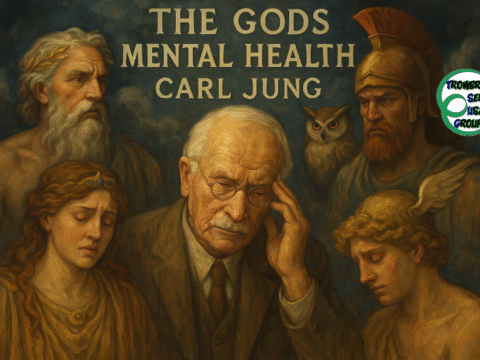
Carl Gustav Jung was a Swiss psychiatrist, psychotherapist, and psychologist who founded the school of analytical psychology. A prolific author of over 20 books, illustrator, and correspondent, Jung was a complex and convoluted academic, best known for his concept of archetypes
Posted in Borderline Personality Disorder BPD ethnic minorities LGBTQ+ Meditation Mental Health Mental Health Research Trowbridge Guru Trowbridge Service Users Group TUG News

Mental Health and the Gods: How Ancient Deities Mirror Modern Diagnoses

Intro: What if the gods of Greek and Roman mythology weren’t just distant divine figures—but archetypes of our deepest psychological struggles? From the chaos of…
Continue Reading Mental Health and the Gods: How Ancient Deities Mirror Modern Diagnoses
carl jung the gods and mentalhealth
Posted in Borderline Personality Disorder BPD ethnic minorities Meditation Mental Health Mental Health Research Trowbridge Guru Trowbridge Service Users Group TUG News

The Gods and Mental Health: A Psychological and Mythological Exploration

The divine figures of ancient mythology often embody extreme and volatile behaviors. In the modern era, psychologists and scholars have examined these mythologies through the…

Continue Reading The Gods and Mental Health: A Psychological and Mythological Exploration
As climate change continues to fuel more frequent and intense heatwaves, understanding the connection between heat, mental health, and medication is more important than ever. This is not just an environmental issue—it's a public health emergency.
Posted in Heatwave2025 Mental Health Mental Health Research Press Release Summer Evening Group Trowbridge Service Users Group

How Extreme Heat Affects Mental Health and Medication

Title: Burning Minds: The Hidden Mental Health Impact of Extreme Heat As global temperatures continue to rise, the dangers of extreme heat go far beyond…
Continue Reading How Extreme Heat Affects Mental Health and Medication
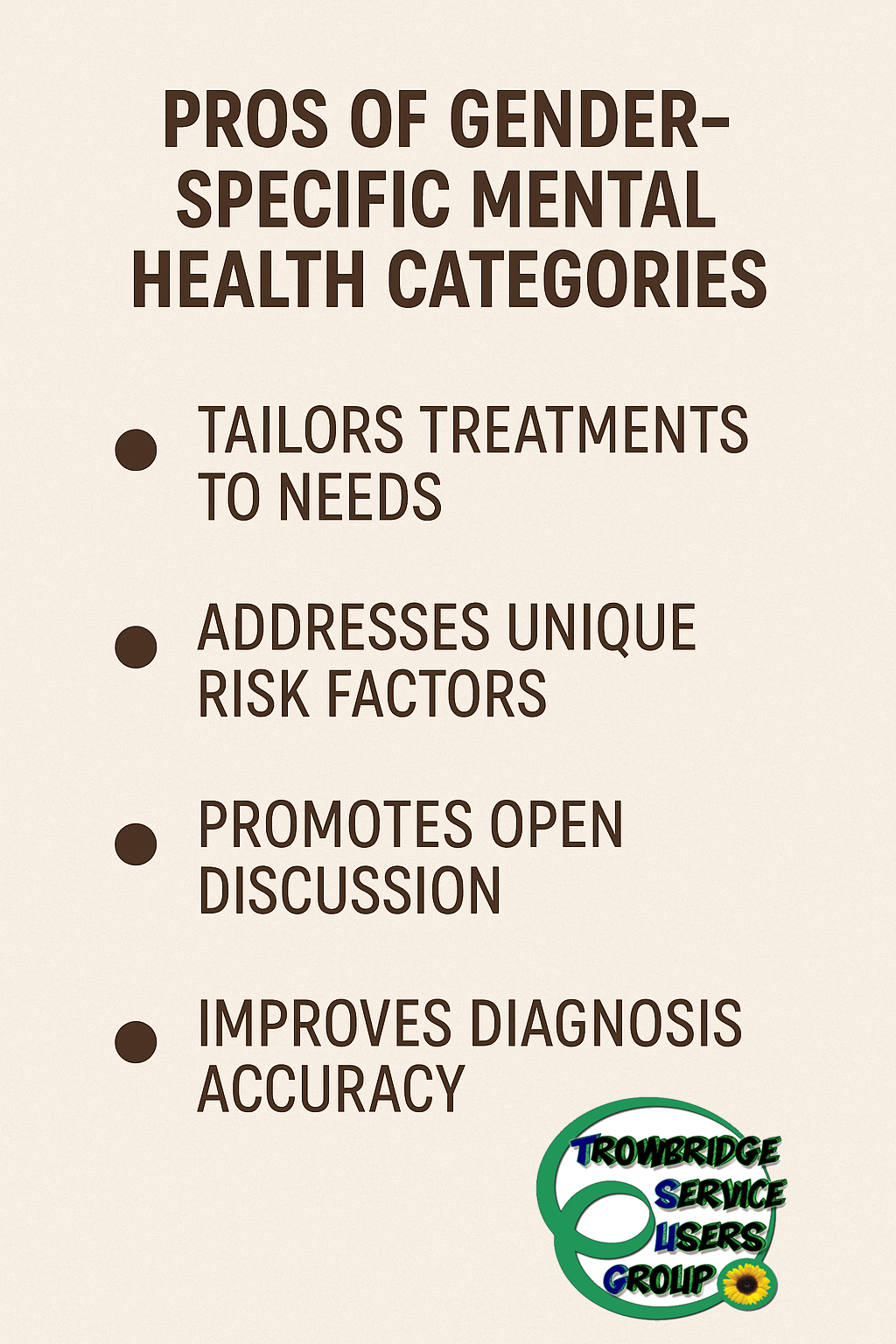
Men’s vs. Women’s Mental Health: Are the Differences Real or Reinforced? Body: When we divide mental health into gender-specific categories—“men’s mental health” and “women’s mental health”—we might think we're being helpful. After all, men and women do experience mental health differently in many ways. But are these differences rooted in biology, or are they shaped by culture, stigma, and expectations? And is this division always helpful? ✅ The Pros of Gender-Based Mental Health Approaches 1. Gendered Experiences Are Real Men and women often face different life pressures. Men are more likely to be told to "man up," while women may face the mental health effects of sexism, gender-based violence, and hormonal changes. 2. It Helps Tailor Support Campaigns like Movember highlight men’s mental health struggles, including the shockingly high male suicide rate. Meanwhile, women benefit from targeted care for postpartum depression, menopause-related anxiety, or trauma recovery. 3. It Challenges Harmful Norms Talking about gender differences allows us to question harmful ideas—like the myth that women are “too emotional” or that “real men don’t cry.” ❌ The Cons of Dividing Mental Health by Gender 1. It Reinforces the Gender Binary Not everyone identifies as male or female. Trans, non-binary, and gender-diverse people often fall outside the “men’s vs. women’s” model and face unique, under-researched challenges. 2. It Misses Intersectionality A Black woman, a gay man, or a working-class trans person may experience mental illness in ways that can’t be captured by gender alone. Race, class, sexuality, and location all play crucial roles. 3. It Can Lead to Stereotyping Saying “women are more anxious” or “men don’t talk about feelings” flattens the complexity of how mental health actually shows up. 4. It Risks Misdiagnosis Men may express depression as anger or substance abuse and be overlooked. Women may be diagnosed quickly but prescribed medication over therapy. ⚖️ Are There Actual Gender Differences? Statistically, yes: Men are: 3x more likely to die by suicide. Less likely to seek mental health support. More prone to substance use and risk-taking behaviours. Women are: More likely to be diagnosed with anxiety, PTSD, and eating disorders. More vulnerable to trauma from abuse. More likely to access services—but often not given choices beyond medication. But these numbers don’t tell the whole story. Many of these differences are socially constructed, not biologically inevitable. They reflect how society teaches people to express—or suppress—their emotions. 🧠 What We Need Instead Support that’s gender-aware, but not gender-limited Services that are inclusive of trans and non-binary people An intersectional approach that sees the whole person, not just their gender Final Thought: Let’s use gender to inform care—not to box people in. Everyone deserves mental health support that respects their identity, experience, and humanity.
Posted in Mental Health Mental Health Research Trowbridge Service Users Group

Men’s vs. Women’s Mental Health: Are the Differences Real or Reinforced?

When we divide mental health into gender-specific categories—“men’s mental health” and “women’s mental health”—we might think we’re being helpful. After all, men and women do…

Continue Reading Men’s vs. Women’s Mental Health: Are the Differences Real or Reinforced?
The History of Homosexuality in Mental Health: From Pathology to Pride
Posted in LGBTQ+ Mental Health Mental Health Research Trowbridge Service Users Group

The History of Homosexuality in Mental Health: From Pathology to Pride

For much of the 20th century, the relationship between homosexuality and the field of mental health was fraught with stigma, misunderstanding, and controversy. Today, while…
Continue Reading The History of Homosexuality in Mental Health: From Pathology to Pride
Social interaction and the benifits to mental health
Posted in Mental Health Mental Health Research Service User Involvement

How Social interaction plays a crucial role in improving mental health

Social interaction is important for good mental health Social interaction plays a crucial role in improving mental health by providing emotional support, reducing stress, and…

Continue Reading How Social interaction plays a crucial role in improving mental health
Posted in Black History Month Covid-19 ethnic minorities Mental Health Mental Health Research Press Release Trowbridge Service Users Group TUG News

Black History Month & Mental Health

Black History Month offers an opportunity to celebrate the contributions of many individuals, especially at a time when systemic disparities disproportionately affect Black communities.
Continue Reading Black History Month & Mental Health
Fund rasing in trowbridge for mental health day
Posted in Art Class LGBTQ+ Mental Health Mental Health Research Press Release Trowbridge Service Users Group TUG News

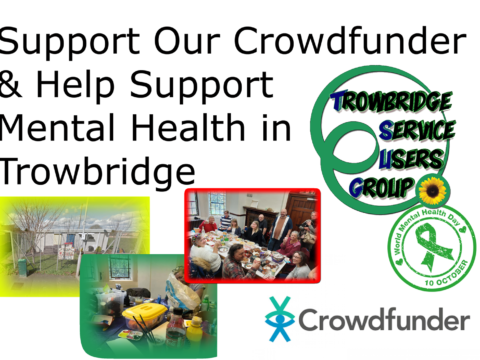
Fund Raising for Mental Health Day

This year Trowbridge Service Users Group is fundraising to raise ÂŁ250 to help keep our service open. Trowbridge Service Users Group (TSUG) provides a free self-referral service for those living with mental health issues in and around Trowbridge.

Continue Reading Fund Raising for Mental Health Day
They’re just trying to get those with mental illness to remove themselves.
Posted in Across the Web / Research Department for Work and Pensions (DWP) Empoyment Mental Health Mental Health Research Press Release Trowbridge Service Users Group

They’re just trying to get those with mental illness to remove themselves.

“I’ve been dealing with mental health challenges since childhood. Now at 52, living with Borderline Personality Disorder has its daily struggles. I’ve managed to find a way to get through each day, even when it feels like just existing, not truly living. On my toughest days, what keeps me going is knowing the pain it would cause for those who care about me if I were to give up.

Starting this support group was a response to feeling abandoned by the NHS. I understand that I may not fit into society’s mold, and my connections with family are minimal. My days are a rollercoaster of emotions, from dark thoughts to moments of mania. I wear masks to navigate social situations, often feeling like a different person entirely.

Accessing NHS support has been a challenge. There’s a disconnect between my call for help and any meaningful response. Many in our group face the same struggle. Now, with proposed changes in disability benefits, the future looks uncertain.

For those with mental health conditions, working from home can feel isolating. Encouraging socialization and building confidence is crucial. As for the potential reduction in benefits for those with a history of self-harm, it feels like another blow. It’s clear the government’s focus is on cutting people from the system, not genuinely helping.

The UN and equality watchdog reports highlight the systematic discrimination against disabled individuals, but the government remains unresponsive. Personally, I can’t thrive in a traditional work environment, nor can I withstand a benefit cut. Stability is my lifeline; it allows me to contribute and be a part of something bigger.

Reducing benefits or forcing me to stay at home only hinders my ability to maintain stability and engage in self-care. It feels like we’re in limbo, waiting for decisions that could drastically impact our lives.”

Continue Reading They’re just trying to get those with mental illness to remove themselves.