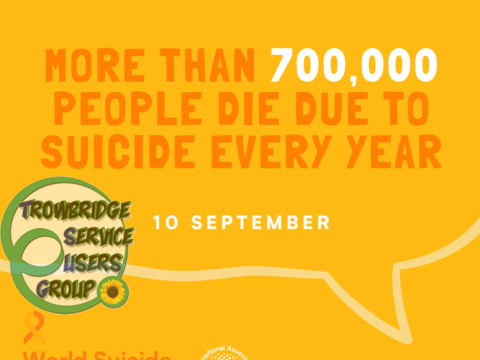

World Suicide Prevention Day reminds us: Suicide is preventable. Encouraging conversations, showing empathy, and sharing resources can turn despair into hope. Whether you're struggling or supporting someone else, there are paths forward—and people standing with you.
Posted in Uncategorized

World Suicide Prevention Day

World Suicide Prevention Day is observed globally every year on 10 September, coordinated by the International Association for Suicide Prevention (IASP) in partnership with the…
Continue Reading World Suicide Prevention Day
Posted in Depression Mental Health World Suicide Prevention Day

World Suicide Prevention Day – Changing the Narrative

Every year on 10 September, the world comes together to mark World Suicide Prevention Day (WSPD). First launched in 2003 by the International Association for…

Continue Reading World Suicide Prevention Day – Changing the Narrative
World Suicide Prevention Day (WSPD), observed each year on 10 September, was established in 2003 by the International Association for Suicide Prevention (IASP) in partnership with the World Health Organization (WHO) and the World Federation for Mental Health
Posted in Trowbridge Service Users Group Unalive World Suicide Prevention Day

World Suicide Prevention Day

Introduction World Suicide Prevention Day (WSPD), observed each year on 10 September, was established in 2003 by the International Association for Suicide Prevention (IASP) in…

Continue Reading World Suicide Prevention Day
Water Feature
Posted in Art Class Gardening Meditation Mental Health Trowbridge Service Users Group TUG News

Upcycling Butler Sinks into a Calming Garden Water Feature

At Trowbridge Service Users Group, we’re always looking for creative ways to make our garden space more welcoming, soothing, and connected to nature. Recently, we…

Continue Reading Upcycling Butler Sinks into a Calming Garden Water Feature
Posted in Uncategorized

Am I Mentally Ill or Just a Generation X? pt2

A Psychological and Sociocultural Analysis of Generational Trauma Introduction The question “Am I mentally ill or just a Generation X?” reflects a tension between individual…

Continue Reading Am I Mentally Ill or Just a Generation X? pt2
Am I Mentally Ill or Just a Generation X? A Psychological and Sociocultural Analysis of Generational Trauma Introduction The question “Am I mentally ill or just a Generation X?” reflects a tension between individual pathology and collective experience. For many members of Generation X (born roughly between 1965 and 1980), symptoms of depression, anxiety, emotional detachment, or cynicism may not be solely the result of personal dysfunction but rather the legacy of a specific sociohistorical upbringing. This paper explores how psychological theories of trauma, development, and resilience intersect with the sociocultural context of Generation X. It argues that the challenges faced by this cohort are best understood not only through a clinical lens but also as manifestations of shared generational conditioning. Generation X in Historical and Cultural Context Generation X was shaped by profound social shifts: rising divorce rates, increased maternal participation in the workforce, and the decline of traditional community structures (Strauss & Howe, 1991). As a result, many children became “latchkey kids,” left unsupervised after school, fostering independence but also emotional neglect (Henderson, 2017). Unlike the Baby Boomers, whose upbringing was characterized by postwar optimism, or Millennials, raised under intensive “helicopter parenting,” Gen X developed under an ethos of self-reliance and skepticism of institutions. The broader cultural environment emphasized stoicism and emotional restraint. Mental health discourse was minimal, and psychiatric treatment carried significant stigma (Kessler et al., 2005). This climate discouraged vulnerability and normalized the suppression of emotional needs, conditions that contemporary psychology would recognize as risk factors for later difficulties in emotional regulation and attachment (Bowlby, 1988).
Posted in Anxiety Borderline Personality Disorder BPD Depression Eating Disorders Economic ethnic minorities

Am I Mentally Ill or Just a Generation X?

A Reflection on Cultural Upbringing, Trauma, and Mental Health Narratives Introduction In recent years, conversations about mental health have become increasingly visible in mainstream culture….

Continue Reading Am I Mentally Ill or Just a Generation X?
If you’re facing an eating disorder—or supporting someone who is—remember: you are not alone. Whether through NHS services like Wiltshire’s specialist team or charities like Beat and SWEDA, help is available, free, and just a phone call or email away. Recovery is a journey. Taking the first step—whether reaching out to a helpline, talking to your GP, or joining a support group—brings people closer to hope, healing, and a healthier future.
Posted in Anorexia Nervosa Binge-Eating Disorder (BED) Bulimia Nervosa Eating Disorders Mental Health Mental Health Research Trowbridge Guru

Understanding Eating Disorders: Types, Misconceptions, and Paths to Recovery

Eating disorders are serious mental health conditions. It’s critical to know that they’re not choices—they’re complex illnesses shaped by biological, psychological, and social factors. Recovery…

Continue Reading Understanding Eating Disorders: Types, Misconceptions, and Paths to Recovery
Eating disorders remain among the gravest mental health conditions—but they are diverse, widespread, and treatable. Understanding the various forms, dispelling myths, and improving access to care are vital for saving lives and fostering recovery.
Posted in Across the Web / Research Anorexia Nervosa Avoidant/Restrictive Food Intake Disorder Binge-Eating Disorder (BED) Bulimia Nervosa Eating Disorders Mental Health Research Trowbridge Guru

Eating Disorders: Types, Prevalence, Misunderstandings, and Treatment

1. Introduction & Common Misunderstandings Eating disorders are serious mental illnesses marked by persistent, unhealthy eating behaviors and distorted attitudes toward food, weight, or body…

Continue Reading Eating Disorders: Types, Prevalence, Misunderstandings, and Treatment
What Is Depression? Depression is a condition where low mood lasts for two weeks or longer, affecting work, relationships, and health. It’s not just about sadness — many people also experience: Loss of interest or pleasure. Sleep and appetite changes. Fatigue or low energy. Difficulty concentrating. Feelings of worthlessness or guilt. Thoughts of death or suicide.
Posted in Bipolar Depression Depression Major Depressive Disorder (MDD) Mental Health Persistent Depressive Disorder Postnatal Depression Treatment-Resistant Depression Trowbridge Guru

Understanding Depression: Types, Diagnosis, Treatments, and Facts

Depression is one of the most common mental health conditions in the UK. It goes far beyond simply feeling sad — it can affect thoughts,…

Continue Reading Understanding Depression: Types, Diagnosis, Treatments, and Facts
Depression is common, disabling, but treatable. With rising prevalence, especially in younger adults, timely diagnosis and evidence-based treatment are critical. Locally in Wiltshire, thousands of residents are affected — but effective treatments are available, from NHS Talking Therapies to specialist care.
Posted in Bipolar Depression Depression Major Depressive Disorder (MDD) Mental Health Mental Health Research Persistent Depressive Disorder Postnatal Depression Psychotic Depression Seasonal Affective Disorder Treatment-Resistant Depression Trowbridge Guru

Depression: Types, Diagnosis, Treatments, and UK Context (with Wiltshire Spotlight)

Abstract Depression is one of the most common mental health conditions worldwide and in the UK. It includes a spectrum of disorders ranging from mild…

Continue Reading Depression: Types, Diagnosis, Treatments, and UK Context (with Wiltshire Spotlight)